

Stains are chemical traces left behind by oils, minerals, proteins, pigments, dust, or microbes on a surface. They may look simple, but each mark has its own structure. A coffee stain behaves differently from grease. Soap scum does not respond like mud. Rust needs a different approach from food residue. This is why surface cleaning is more than wiping. It is a controlled process of breaking bonds, loosening particles, changing solubility, and making unwanted matter easier to remove.
Resources about House cleaning in Mecca (نظافة المنازل في مكة) often point to a practical truth: effective cleaning depends on matching the method to the surface and the type of dirt. In chemistry, that same idea becomes even clearer. A cleaner works well when its ingredients interact with the stain in the right way. Water alone may rinse away loose dust, but many stains need detergents, acids, alkalis, enzymes, or oxidizers before they can be lifted safely.
Why Stains Resist Simple Cleaning
A stain remains on a surface because of attraction. Oil clings to kitchen tiles because water cannot easily mix with fat. Hard-water marks appear when minerals such as calcium and magnesium dry on glass or metal. Protein stains from food or body fluids can bind tightly as they dry. Colored stains, such as tea or fruit juice, often contain pigments that settle into tiny pores.
The American Cleaning Institute explains that surfactants reduce water’s surface tension, allowing water to spread and wet a surface more effectively. This matters because water must first reach the soil before it can help remove it. Once surfactants surround oily dirt, they help suspend it in water so it can be rinsed away.
The Problem: Dirt Is Often Chemically Stable
The main challenge in cleaning is that many stains are stable under normal conditions. Grease does not dissolve in plain water. Mineral deposits do not disappear with light wiping. Some organic stains darken as they oxidize. Others become harder to remove after heat, sunlight, or time changes their structure.
This is why cleaning products are designed with specific chemical roles. A detergent may lift oily residue. An acid may dissolve mineral scale. An alkaline cleaner may break down fatty deposits. An enzyme may digest protein or starch-based stains. Each ingredient is selected because it changes the relationship between the stain, the surface, and the cleaning solution.
The Chemical Solution: Changing the Stain
Stain removal becomes a chemical transformation when the cleaner changes the stain’s form or behavior. This does not always mean the stain disappears instantly. More often, the process makes the stain weaker, more soluble, or easier to separate from the surface.
For example, alkaline cleaners can help break down fats through reactions that make greasy material easier to wash away. Acidic cleaners can react with alkaline mineral deposits, such as limescale, and loosen them from bathroom fixtures or tiles. Oxidizing agents can change the chemical structure of colored compounds, making some stains appear lighter or less visible.
Encyclopaedia Britannica defines oxidation-reduction reactions as chemical reactions where the oxidation number of a substance changes. In cleaning, this helps explain why oxidizers such as hydrogen peroxide or hypochlorite-based products can alter stain molecules rather than simply push them aside.
How Surfactants Lift Dirt
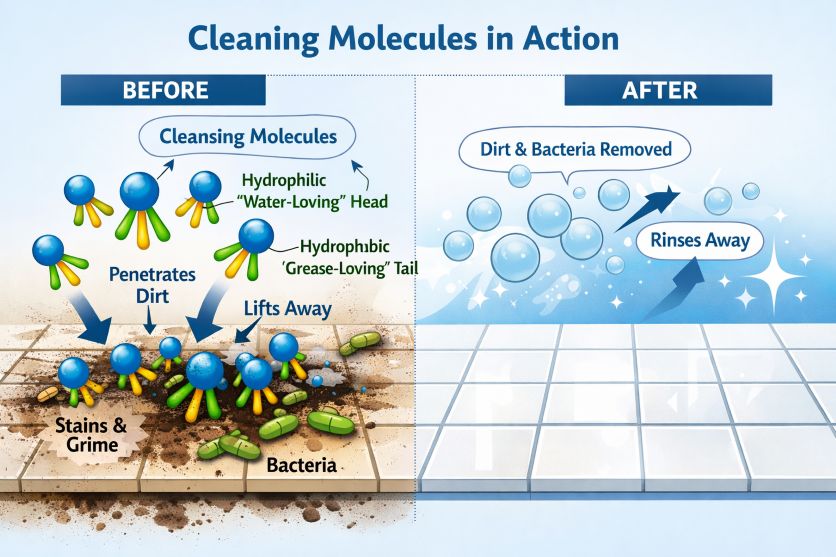
Surfactants are among the most important ingredients in everyday cleaning. One part of the surfactant molecule is attracted to water, while another part is attracted to oil or grease. This dual nature allows surfactants to bridge the gap between water and oily dirt.
When enough surfactant molecules gather, they form tiny structures that can trap oily material inside. The stain is no longer tightly attached to the surface. Instead, it becomes suspended in the cleaning solution. Rinsing then removes both the cleaner and the loosened soil.
This is why scrubbing alone is not always enough. Friction helps, but chemistry does much of the work. A well-chosen cleaning product reduces the effort needed because it changes how dirt holds onto the surface.
Why Cleaning Comes Before Disinfection
Cleaning and disinfecting are often treated as the same task, but they serve different purposes. Cleaning removes dirt, organic matter, and many germs from surfaces. Disinfection uses chemicals to kill remaining microorganisms. The order matters.
The Centers for Disease Control and Prevention notes that surfaces should be cleaned before sanitizing or disinfecting because dirt can block chemicals from reaching germs. This means a visibly dirty surface may reduce the effectiveness of a disinfectant if cleaning is skipped.
For homes, offices, kitchens, and shared facilities, this distinction supports better hygiene management. A surface may look clean but still need disinfection in certain settings. Another surface may need only routine cleaning if there is no special health risk. Good sanitation depends on knowing the difference.
Real-World Application in Hygiene Systems
In organized home maintenance and public sanitation work, cleaning chemistry guides practical decisions. Bathrooms often need products that handle mineral deposits, soap residue, and moisture-related buildup. Kitchens need attention to fats, food particles, and high-touch areas. Floors may require neutral cleaners to avoid damaging finishes.
The U.S. Environmental Protection Agency maintains its Safer Choice program to help identify cleaning product ingredients that meet health and environmental safety criteria. This shows that modern cleaning is not only about strength. It also involves safer formulation, correct use, and better matching of chemicals to tasks.
These principles are especially useful in hygiene management systems where many surfaces must be cleaned regularly. A poorly matched product can waste time, damage materials, or leave residue behind. A suitable product, used correctly, can improve consistency while reducing unnecessary chemical use.
Why Time, Temperature, and Technique Matter
Chemistry also explains why cleaning instructions often mention contact time, dilution, and temperature. Some products need time to react with stains. Others must be diluted because too much concentration can leave residue or damage surfaces. Warm water may help dissolve certain soils, but heat can also set protein stains if used too early.
Technique completes the process. The cleaner changes the stain, while wiping, brushing, or rinsing removes the loosened material. Without enough contact time, the reaction may be incomplete. Without rinsing, the loosened dirt may remain on the surface. Cleaning works best when chemistry and method support each other.
READ ALSO: The Science of Clean Living Spaces – How Hygiene Improves Health and Productivity
Conclusion
Surface cleaning is a chemical transformation because it changes how stains behave. Grease becomes easier to suspend. Minerals dissolve. Pigments may oxidize. Proteins and starches can be broken down. Even ordinary wiping becomes more effective when the right chemical process happens first.
A cleaner home, apartment, or shared facility is therefore not just the result of effort. It is the result of understanding surfaces, soils, products, and timing. Whether in household upkeep or broader sanitation planning, effective cleaning depends on choosing methods that fit the material and the stain. When chemistry is used carefully, cleaning becomes safer, clearer, and more reliable.


